
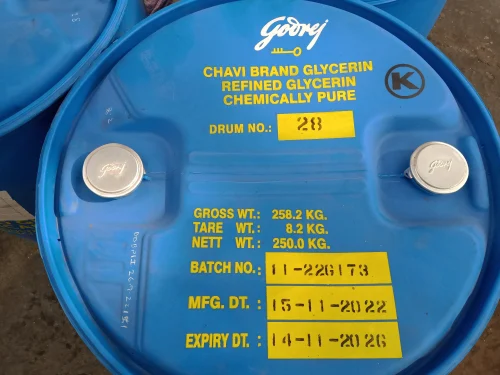
Glycerine (also called Glycerol) is a widely used humectant, solvent, and moisturizer in pharmaceuticals, cosmetics, and food.
???? Basic Information
-
Chemical name: Glycerol
-
Formula: C₃H₈O₃
-
CAS No.: 56-81-5
-
Appearance: Colorless, odorless, viscous liquid
-
Solubility: Miscible with water and alcohol
-
Boiling point: 290 °C
-
Hygroscopic: Absorbs moisture from air
???? Common Uses
-
Pharmaceuticals
-
Cosmetics & Personal Care
-
Moisturizers, lotions, creams, and hair care products
-
Humectant to retain skin moisture
-
Improves texture and spreadability of formulations
-
Food Industry
-
Sweetener, humectant, and stabilizer in bakery, confectionery, and beverages
-
Industrial Applications
???? Key Properties & Benefits
-
Humectant: Draws water into skin or product
-
Viscosity modifier: Adds body to creams and syrups
-
Solvent: Dissolves water-soluble ingredients
-
Non-toxic and safe: GRAS status in food and cosmetic products
⚙️ Handling & Storage
-
Store in a cool, dry place, tightly closed
-
Hygroscopic—avoid moisture contamination
-
Non-hazardous, but avoid prolonged contact with eyes
If you want, I can make a comparison table of Glycerine vs Propylene Glycol vs Butylene Glycol, showing solubility, humectant strength, and cosmetic/pharma uses—it's extremely useful for formulation purposes.